
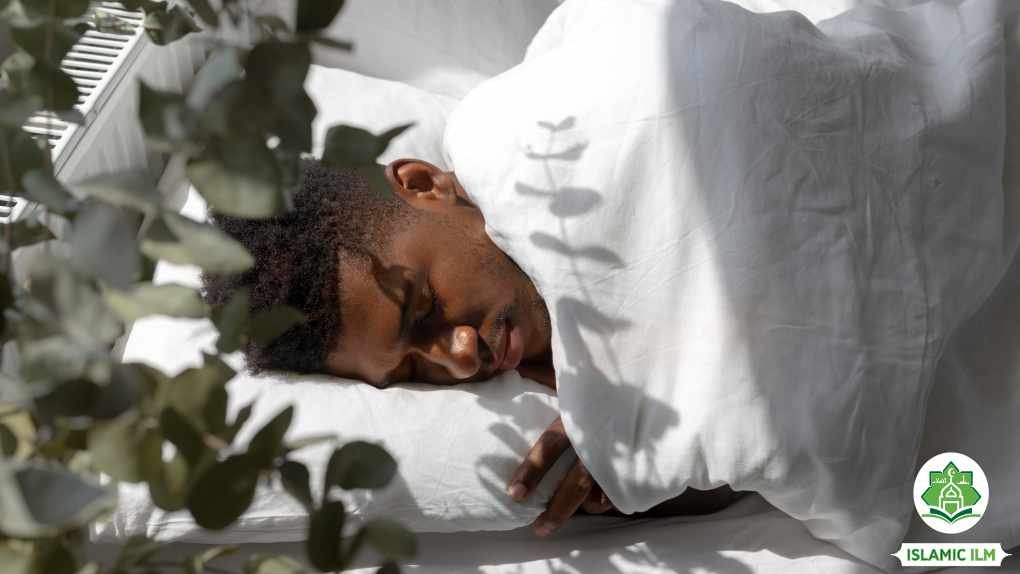
We spend approximately one-third of our lives asleep. In Islam, this time is not wasted. Sleep is a profound blessing and a sign of Allah’s mercy, a time for the body to rest and the soul to be refreshed.
Like all aspects of a believer’s life, our sleep and waking can be transformed from a mere biological necessity into a continuous act of worship (ibadah). The Prophet Muhammad (ﷺ), whose sleep was the “most moderate and beneficial,” taught us a complete set of etiquettes (adab) to ensure our rest is blessed, protected, and purposeful.
Here is a guide to the Prophetic etiquette of sleeping and waking up.
Part 1: The Etiquette of Preparing for Sleep
How we end our day has a profound impact on our spiritual state. Following these Sunnahs prepares the heart and body for a peaceful, protected rest.
1. Timing and Preparation
• Sleep Early: The Prophet (ﷺ) disliked sleeping before Isha prayer and engaging in worldly talk after it (Narrated by al-Bukhari). The Sunnah is to sleep soon after Isha, unless there is a valid reason, which helps in waking up early for Fajr and Tahajjud.
• Set an Intention for Fajr: True rest is one that prepares you for your next act of worship. Take practical steps to wake up for Fajr, just as the Prophet (ﷺ) appointed Bilal (RA) to keep watch for the prayer during a journey (Narrated by an-Nasa’i).
2. Securing Your Home
Before sleeping, take these steps for physical and spiritual safety:
• Close Doors: The Messenger of Allah (ﷺ) said, «Close the doors and mention the name of Allah, for the Shaytan does not open a closed door.» (Narrated by Muslim)
• Extinguish Fires: For modern homes, this applies to switching off heaters, stoves, or any potential fire hazards. The Prophet (ﷺ) warned, «This fire is an enemy to you, so when you go to sleep, extinguish it to protect yourself.» (Narrated by Muslim)
3. Personal Purification and Posture
• Perform Wudu (Ablution): The Prophet (ﷺ) advised, «When you go to your bed, do wudu as for prayer…» (Agreed upon). This is especially important if one is in a state of junub (ritual impurity). Sleeping in a state of purity invites angels and repels the Shaytan.
• Dust the Bed: Before lying down, dust off the bed three times with the edge of your lower garment (or a cloth), while mentioning Allah’s name. The Prophet (ﷺ) explained, «…for he does not know what came onto his bed after he left it.» (Narrated by Muslim)
• Lie on Your Right Side: After wudu, the Sunnah is to begin your sleep by lying on your right side.
• Avoid Sleeping on Your Stomach: The Prophet (ﷺ) saw a man sleeping this way and said, «This is a manner of sleeping that Allah dislikes – or that Allah hates.» (Narrated by Ibn Majah)
4. Spiritual Fortification: The Adhkar (Remembrances)
This is the most powerful part of the preparation, building a fortress of divine protection around you.
• The Three Quls: The Prophet (ﷺ) would cup his palms together, blow gently into them, and recite Qul Huwa Allahu Ahad, Qul A’oodhu bi Rabb il-Falaq, and Qul A’oodhu bi Rabb in-Nas. He would then wipe his hands over whatever he could of his body, starting with his head, face, and the front of his body, repeating this three times. (Narrated by al-Bukhari)
• Recite Ayat al-Kursi (Al-Baqarah 2:255): The Prophet (ﷺ) told Abu Hurayrah (RA) that whoever recites this verse before sleeping “will have protection from Allah and no devil will come near you until morning.” (Narrated by al-Bukhari)
• Recite the Dua for Sleep:
«Bismika Rabbiy wada‘tu janbi wa bika arfa‘uhu, in amsakta nafsi farhamha wa in arsaltaha fahfazha bima tahfazu bihi ‘ibadaka as-saliheen.» (In Your name, my Lord, I lie down, and in Your name I rise. If You should take my soul then have mercy on it, and if You should return my soul then protect it as You protect Your righteous slaves.) (Narrated by al-Bukhari)
Part 2: The Etiquette of Waking Up
How you begin your day sets the tone for everything that follows. The Sunnah ensures you start with gratitude, purity, and spiritual awareness.
1. Wipe the Sleep from Your Face: As the Prophet (ﷺ) used to do, this is the first physical action, helping you transition from sleep to wakefulness. (Narrated by al-Bukhari)
2. Recite the Dhikr for Waking: Before your mind wanders to the world, let your first words be in remembrance of Allah:
«Alhamdu Lillah alladhi ahyaanaa ba’da ma amaatanaa wa ilayhi-n-nushur.» (Praise be to Allah who has brought us back to life after causing us to die, and to Him is the resurrection.) (Narrated by al-Bukhari and Muslim)
3. Use the Siwak (Tooth-stick): When the Prophet (ﷺ) woke up, he would clean his mouth with the siwak. (Agreed upon). This purifies the mouth in preparation for reciting Qur’an and speaking to Allah in prayer.
4. Wash Your Hands Three Times: The Prophet (ﷺ) said, «When one of you wakes up from sleep, let him wash his hands three times before putting them in the vessel of wudu water, for one of you does not know where his hand spent the night. » (Agreed upon)
5. Rinse Your Nose Three Times: This is a crucial step in wudu, especially upon waking. The Prophet (ﷺ) said, «When one of you wakes up from sleep, let him rinse his nose three times, for the Shaytan spends the night on his nose. » (Narrated by Muslim)
A Final Sunnah: A Partnership in Piety
The Prophet (ﷺ) encouraged spouses to support each other in worship. He said:
May Allah have mercy on a man who gets up at night and prays, and wakes his wife up, and if she refuses, he sprinkles water on her face. May Allah have mercy on a woman who gets up at night and prays, and wakes her husband up, and if he refuses, she sprinkles water on his face. » Narrated by Ahmad and Abu Dawud; classed as sahih by al-Albani.”
By embracing these simple, beautiful etiquettes, our sleep is no longer a passive state but an active, conscious part of our faith—bookended by the remembrance of Allah.
Maa sha Allaah. I learnt a lot from this post. JazaakumuLlaahu khayrā sir. May Allāh increase you in beneficial knowledge Aamīn.