
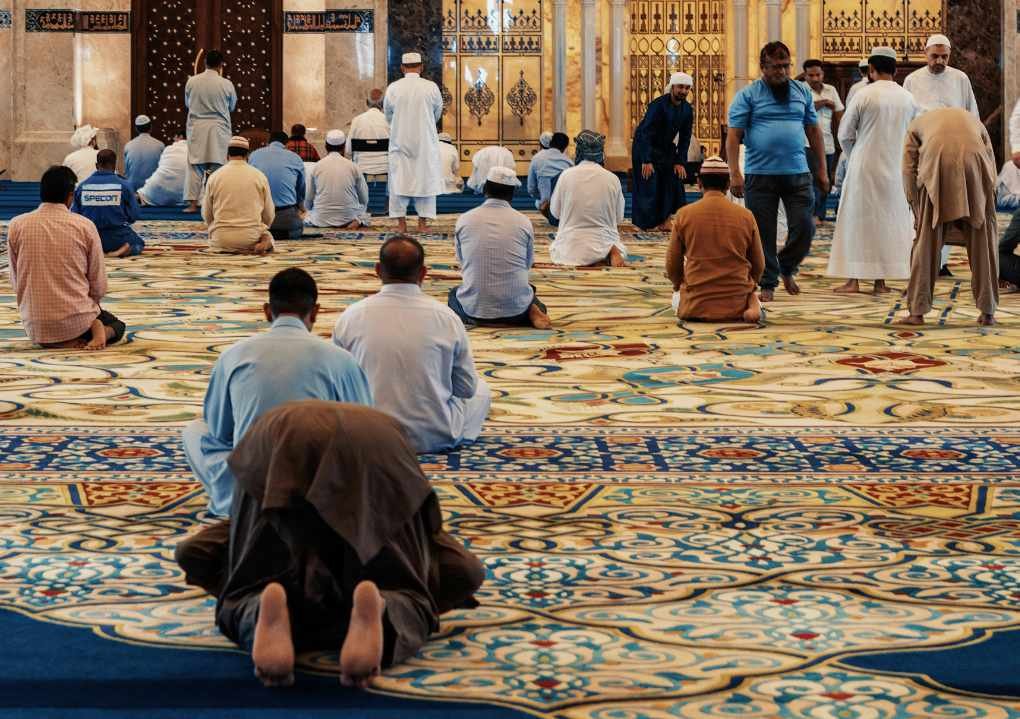
As human beings, forgetfulness is part of our nature. Even in our most sacred moments—standing before Allah in Salah our minds may wander, or we may make a mistake.
The Prophet Muhammad (ﷺ) said: «I am only human, like you; I forget as you forget. So, if one of you forgets something [in his prayer], let him prostrate twice.» (Narrated by Muslim)
This is the mercy of Islamic law: mistakes do not necessarily invalidate your worship. Instead, we have Sujud as-Sahw (The Prostration of Forgetfulness) two prostrations performed to compensate for discrepancies in the prayer.
Scholars unanimously agree that this is prescribed. But when do you do it? And do you perform it before or after the Tasleem (salutation)? This guide breaks down the three main reasons for Sujud as-Sahw: Addition, Omission, and Uncertainty.
1. Adding to the Prayer (Az-Ziyadah)
This occurs if you unintentionally add an action, such as an extra bowing (ruku), prostration (sujud), standing, or even a whole extra rakah.
The Rule: If you have added something to the prayer, the Prostration of Forgetfulness should be done after the Tasleem.
What to do:
• If you realize during the act: Stop the extra action immediately. For example, if you stand up for a fifth rakah and realize it, sit down immediately. If you continue after realizing, your prayer becomes invalid.
• Complete the prayer: Finish your tashahhud and say the Tasleem.
• Perform Sujud as-Sahw: Prostrate twice, then say the Tasleem again.
The Evidence:
It was narrated that the Messenger (ﷺ) once prayed five rakahs. When asked if the prayer had been lengthened, he said: «No.» They said: “You prayed five.” So, he turned and prostrated twice, then he said the tasleem. (Narrated by Muslim)
2. Omitting Something from the Prayer (An-Naqs)
Omitting an action falls into two categories: omitting a Wajib (Obligatory) act or omitting a Rukn (Essential Pillar). The ruling differs for each.
A. Omitting an Obligatory Act (Wajib)
Examples: The first Tashahhud, or the Tasbeeh during bowing/prostrating.
The Rule: If you miss a Wajib act, you do not return to it if you have already moved to the next position. Instead, perform the Prostration of Forgetfulness before the Tasleem.
The Evidence:
The Prophet (ﷺ) once stood up for the third rakah without sitting for the first tashahhud. He did not sit back down. Instead, before the tasleem, he said takbeer and prostrated twice while sitting. (Narrated by al-Bukhari and Muslim)
B. Omitting an Essential Pillar (Rukn)
Examples: Reciting Al-Fatihah, Bowing (Ruku), Prostration (Sujud).
The Rule: A Rukn cannot be made up for by Sujud as-Sahw alone; the action itself must be performed.
1. If you remember before reaching the same point in the next rakah: Go back immediately, perform the missed pillar, and continue from there.
2. If you remember after reaching the same point in the next rakah: The previous rakah (where the mistake happened) is cancelled. The current rakah takes its place.
3. Exception: If the omitted Rukn is the Opening Takbeer (Takbeerat al-Ihram), the prayer never started. You must restart entirely.
Timing: In these cases, because you have technically added actions while fixing the mistake, perform Sujud as-Sahw after the Tasleem.
3. Uncertainty and Doubt (Ash-Shakk)
If you are unsure how many rakahs you have prayed (e.g., “Is this my third or fourth rakah?”), the ruling depends on your level of certainty.
Case A: You are completely unsure (50/50)
If neither possibility seems more likely to you:
1. Build on certainty: The “lower number” is considered certain (e.g., if in doubt between 3 and 4, assume 3).
2. Complete the prayer: Perform the remaining rakah based on that lower number.
3. Timing: Perform Sujud as-Sahw before the Tasleem.
The Prophet (ﷺ) said: «…let him ignore what he is uncertain about and proceed on the basis of what he is certain of, then prostrate twice before he says the Tasleem.» (Narrated by Muslim)
Case B: You have a strong feeling (Preponderance)
If you think one possibility is more likely (e.g., you feel fairly sure it is the 4th rakah):
1. Act on the likelihood: Proceed based on what you think is correct.
2. Timing: Perform Sujud as-Sahw after the Tasleem.
The Prophet (ﷺ) said: «Let him determine what he thinks is right, then complete his prayer on that basis, then let him say the tasleem, then prostrate twice.» (Narrated by al-Bukhari)
ALLAH (SWT) KNOWS BEST!
JazaakumuLlaahu khayrā sir. May Allāh reward you abundantly, Aamīn. May Allāh Subuḥaanau wa ta‘ālaa allow isn’t reach Ramadaan and benefit from it immensely, Aamīn.