
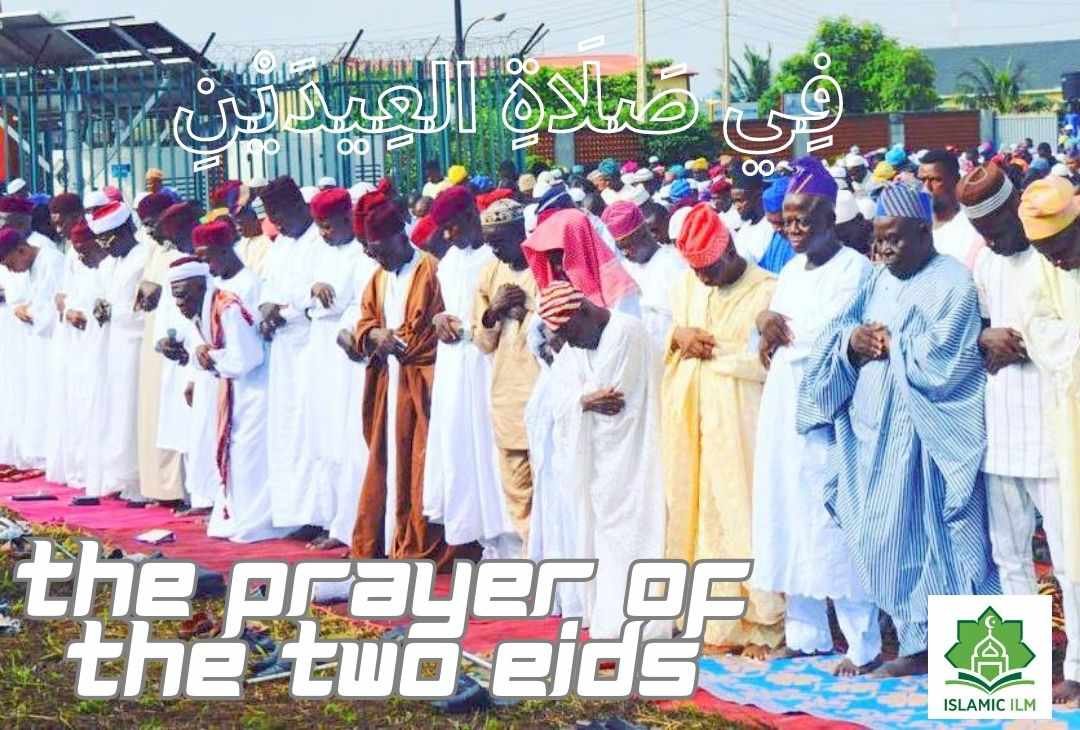
The festivals of Islam are not merely cultural celebrations; they are profound acts of worship deeply rooted in gratitude, unity, and devotion to Allah. At the heart of these celebrations is the Prayer of the Two Eids (Eid al-Fitr and Eid al-Adha).
This prayer is a magnificent symbol of Islam, a public manifestation of faith and piety where the entire community men, women, and children—gathers in devotion. Below is a comprehensive guide to understanding its rulings, the Sunnah etiquette, and exactly how it is performed.
Table of Contents
Toggle1. The Legal Ruling and the Timing
The Prayer of the Two Eids is a confirmed Sunnah (highly recommended) that carries the weight of an obligation in the eyes of many scholars. Allah commanded it in the Quran:
إِنَّآ أَعْطَيْنَـٰكَ ٱلْكَوْثَرَ ١ فَصَلِّ لِرَبِّكَ وَٱنْحَرْ ٢
{Indeed, We have granted you, [O Muhammad], al-Kawthar. So pray to your Lord and sacrifice [to Him alone]} [Al-Kawthar: 1-2].
He also linked ultimate success to this prayer:
قَدْ أَفْلَحَ مَن تَزَكَّىٰ ١٤ وَذَكَرَ ٱسْمَ رَبِّهِۦ فَصَلَّىٰ ١٥
{He has certainly succeeded who purifies himself. And mentions the name of his Lord and prays} [Al-A’la: 14-15].
The Prophet Muhammad ﷺ never missed this prayer. He commanded his community to establish it, even instructing that women and children be brought out to witness the blessings of the day.
The Prescribed Time: The window for the Eid prayer begins when the sun rises to the height of a spear and ends at its zenith (Islamic noon). However, the Sunnah dictates a slight difference in timing between the two Eids:
A.Eid al-Adha:It is best to pray this early (at the height of one spear) so worshippers have ample time to slaughter their sacrifices.
B.Eid al-Fitr:It is best to delay this slightly (at the height of two spears) to give the community enough time to distribute their Zakat al-Fitr.
2. The Sunnah Etiquette (Adab) of Eid
To truly revive the spirit of the day, believers should observe the following etiquettes established by the Prophet ﷺ:
1 .Preparation and Adornment: Perform Ghusl (ritual bath), apply your best perfume, and wear your finest, most beautiful clothing. The Prophet ﷺ used to wear a special striped Yemeni cloak (Hibarah) specifically for every Eid.
2 .Eating: On Eid al-Fitr, it is Sunnah to eat something (like dates) before leaving for the prayer. On Eid al-Adha, you should abstain from eating until you return from the prayer, ideally breaking your fast with the liver of your sacrificed animal.
3 .The Takbeer: Magnifying Allah is the hallmark of Eid. The wording is: “Allahu Akbar, Allahu Akbar, La ilaha illallah, Allahu Akbar, Allahu Akbar, wa lillahil-hamd.”
4 .For Eid al-Fitr: Starts the night before and ends when the Imam emerges for the prayer.
5 . For Eid al-Adha: Starts the night before and continues after every obligatory prayer until the end of the Days of Tashreeq.
6. Changing Routes: Walk to the outdoor prayer area (Musalla) using one route, and return home using a completely different route.
7.Praying Outdoors: It is a strong Sunnah to hold the Eid prayer in an open field or area (Sahraa’). It should only be moved into mosques in cases of necessity, such as heavy rain.
8 .Congratulating One Another: When meeting fellow Muslims, exchange the beautiful greeting of the Companions: “Taqabbal-Allahu minna wa minka” (May Allah accept good deeds from us and from you).
9 .Halal Celebration: Eid is a day of joy! There is no harm in being generous with halal food, drink, and permissible entertainment. As the Prophet ﷺ told Abu Bakr regarding young girls reciting poetry: “O Abu Bakr, indeed every people has a festival, and indeed today is our festival.”
3. How to Perform the Eid Prayer (The Method)
The Prayer of the Two Eids differs uniquely from standard daily prayers. Here is the step-by-step description:
1. No Call to Prayer: People gather at the Musalla reciting the Takbeer. There is no Adhan and no Iqamah.
2. Two Rak’ahs: When the Imam stands, the prayer commences as two units (Rak’ahs).
3. The First Rak’ah: The Imam says the Takbeer seven times (which includes the opening Takbeer of Ihram). The congregation repeats the Takbeer after him. The Imam then recites Surah Al-Fatiha followed by Surah Al-A’la aloud.
4. The Second Rak’ah: Upon rising, the Imam says the Takbeer six times (which includes the Takbeer of standing up). He then recites Surah Al-Fatiha followed by Surah Al-Ghashiyah or Ash-Shams.
5. The Khutbah (Sermon): After concluding the prayer with the Salam, the Imam stands to deliver the sermon. He intersperses his reminder with frequent Takbeers. For Eid al-Fitr, he will remind the congregation about the rules of Zakat al-Fitr. For Eid al-Adha, he will emphasize the Sunnah of the animal sacrifice.
6. No Associated Sunnah Prayers: There are no voluntary prayers before or immediately after the Eid prayer at the Musalla.
What if You Miss the Eid Prayer?
If you arrive late and completely miss the prayer with the Imam, the Sunnah is to pray four Rak’ahs on your own, as instructed by Ibn Mas’ud.
However, if you catch any part of the prayer with the Imam—even if it is just the final sitting (Tashahhud)—you should stand up after the Imam finishes and make up the two Rak’ahs exactly as they are normally performed (with the extra Takbeers).
May Allah allow us to establish the Prayer of the Two Eids with sincerity, and may He accept our devotion and grant our communities boundless joy.