
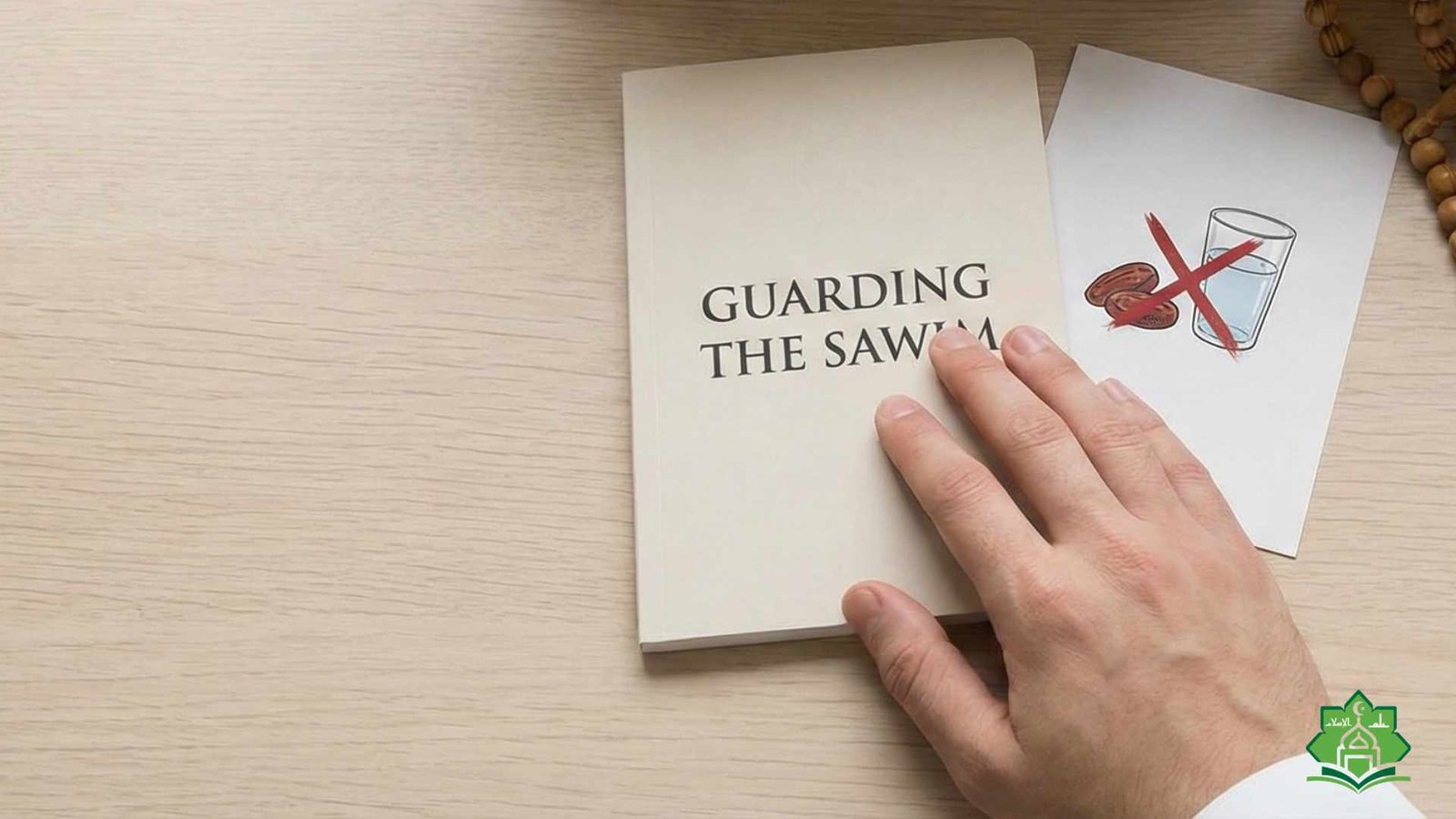
Fasting (Sawm) is a delicate act of worship. It requires not just physical abstinence but also vigilant protection against actions that can render the day’s effort void. While we often focus on hunger and thirst, Islamic jurisprudence outlines specific boundaries that, if crossed, invalidate the fast.
Based on the Quran and Sunnah, here are the seven major things that break the fast, along with the conditions required for them to take effect.
1. Eating and Drinking Deliberately
This is the most fundamental restriction. Consuming food or drink through the mouth invalidates the fast.
{And eat and drink until the white thread of dawn becomes distinct to you from the black thread [of night]. Then complete the fast until the sunset} (Al-Baqarah 2:187).
• The “Forgetfulness” Mercy: If you eat or drink by mistake (forgetting you are fasting), your fast remains valid! You do not need to make it up. The Prophet ﷺ said: «Whoever forgets when he is fasting and eats or drinks, let him complete his fast, for it is Allah Who has fed him and given him to drink.» (Bukhari & Muslim). However, you must stop immediately the moment you remember.
• Medical Issues:
a. Injections: Shots that are purely medicinal (like insulin or painkillers) do not break the fast. However, IV fluids or nutrient injections that replace food do break the fast.
b. Inhalers: Using an asthma inhaler is permissible and does not break the fast.
c. Drops: Eye drops and ear drops do not invalidate the fast.
2. Intentional Vomiting
If a person deliberately induces vomiting (by sticking a finger down the throat or other means), the fast is broken and must be made up.
• Involuntary Vomiting: If you are overcome by nausea and vomit unintentionally, your fast is valid and no make-up is required.
3. Sexual Intercourse
This is the most severe violation of the fast. If a husband and wife have intercourse during the fasting hours of Ramadan:
1. The Sin: It is a major sin.
2. The Fast: It is invalidated immediately.
3. The Penalty (Kaffarah): The husband faces a severe penalty. He must free a slave; if unable, he must fast for two consecutive months; if unable, he must feed 60 poor people.
4. Emission of Semen with Desire
Ejaculation resulting from desire (such as masturbation or intimacy short of intercourse) invalidates the fast.
• Consequence: The person must repent, perform Ghusl (ritual bath), and make up the day later. No heavy expiation (Kaffarah) is required—that is only for intercourse.
• Wet Dreams: A wet dream (Ihtilam) while sleeping does not break the fast, as it is beyond one’s control.
5. Menstruation and Postpartum Bleeding
Regardless of the time of day, if a woman’s period begins or postpartum bleeding occurs, her fast is immediately invalidated.
«Is it not the case that if she gets her menses she does not pray and does not fast?» (Bukhari).
6. Cupping (Hijamah)
According to the Hanbali view referenced in the text, blood cupping breaks the fast for both the person doing it and the one receiving it.
• Blood Donation: Donating a small amount of blood for tests is permissible. However, donating a large amount (like a full pint) is discouraged as it weakens the body and acts similarly to cupping; to be safe, one should make up that day. Receiving a blood transfusion invalidates the fast.
7. Apostasy
If a person leaves the fold of Islam (may Allah protect us), their fast is immediately rendered void, as valid worship requires belief (Iman).
Three Conditions for Invalidation
For the actions above (like eating or drinking) to actually break your fast, three conditions must be met. If these are missing, the fast is still valid:
1.You must be aware of the ruling and the time. (Ignorance of the law or thinking it was still night excuses you).
2.You must remember you are fasting. (Eating out of forgetfulness is excused).
3.You must do it by choice. (If forced to break the fast, it remains valid).
Conclusion
Fasting is a discipline of the body and the will. By avoiding these invalidators, we ensure our physical hunger translates into spiritual acceptance. Always remember that Allah is Merciful; He excuses the forgetful and the coerced, but He expects mindfulness and sincerity from those who are able.