
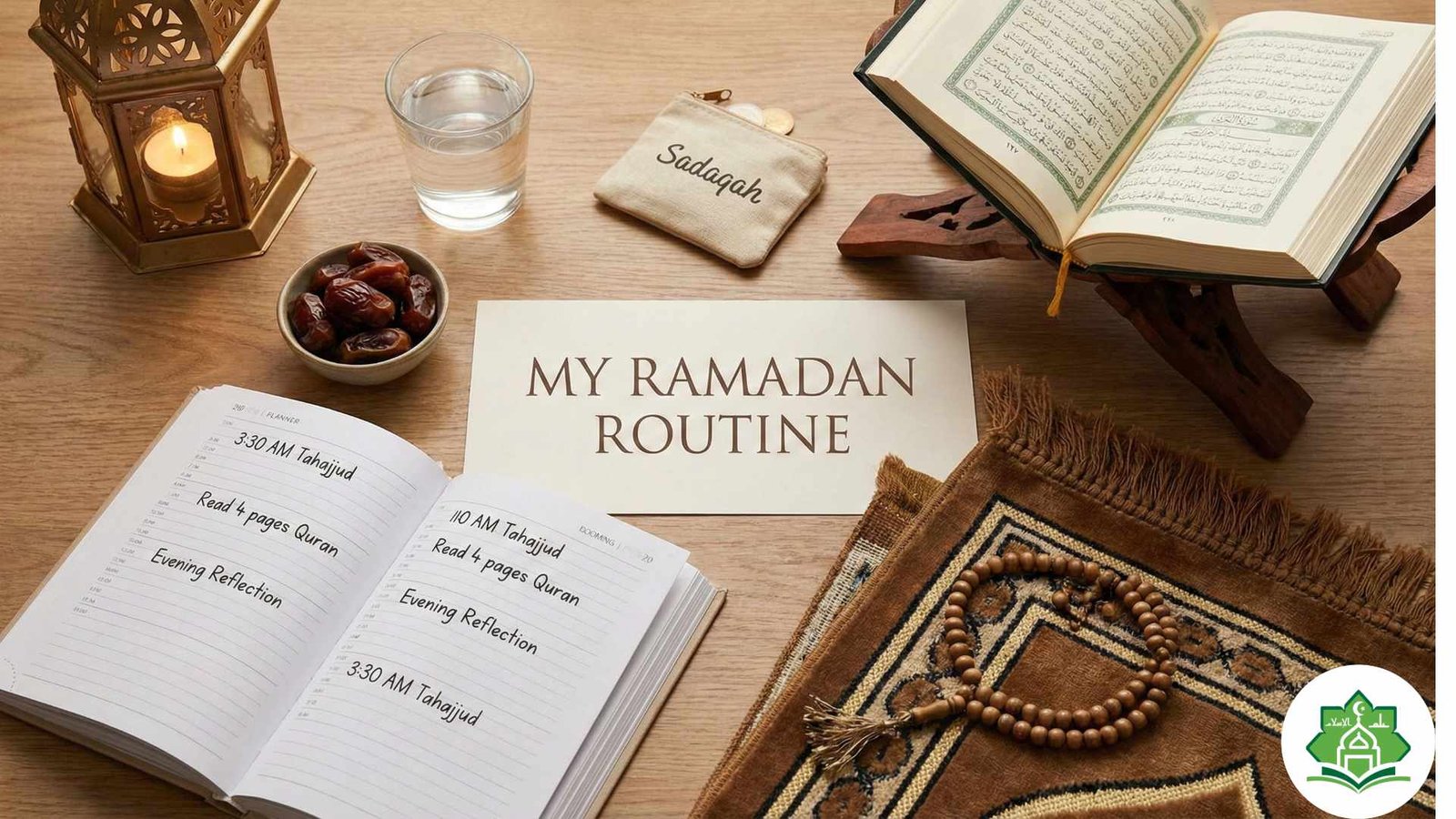
Fasting is valid as long as one abstains from food, drink, and desires from dawn to sunset. However, to transform a fast from a mere routine into a spiritually charging experience, we look to the Mustahabb (encouraged/recommended) acts. These are the practices of the Prophet Muhammad ﷺ that add “Barakah” (blessing) and immense reward to our worship.
Table of Contents
Toggle1. Suhur: The Blessed Pre-Dawn Meal
The Prophet ﷺ commanded us not to skip this meal, saying:
«Eat Suhur, for in Suhur there is blessing (Barakah).» (Bukhari and Muslim).
Suhur is not just about physical fuel; it is a spiritual act. Even if you do not feel hungry, you should partake in it to gain the reward.
-
A Sip of Water Counts: The Prophet ﷺ said: «Eating Suhur is a blessing, so do not omit it, even if one of you only has a sip of water, for Allah and His angels send blessings upon those who eat Suhur.» (Ahmad).
-
Delaying Suhur: It is Sunnah to delay the Suhur until close to the time of Fajr. Zayd ibn Thabit (RA) narrated that the gap between their Suhur and the prayer was roughly the time it took to recite fifty verses of the Quran.
2. Breaking the Fast (Iftar) Promptly
Unlike Suhur, which is delayed, Iftar should be hastened. The moment the sun sets, the fasting person should break their fast.
«The people will continue to be fine, so long as they hasten to break the fast.» (Bukhari and Muslim).
Common Misconception: Some people wait until the Muadhdhin finishes the entire Adhan or reaches the phrase “Ashhadu an laa ilaaha ill-Allah” before eating. This is contrary to the Sunnah. The fast should be broken as soon as the time enters (sunset).
The Sunnah Menu for Iftar
The Prophet ﷺ followed a specific order when breaking his fast:
-
Fresh Dates (Rutab): The preferred option.
-
Dried Dates (Tamr): If fresh dates are unavailable.
-
Water: If no dates are available, a few sips of water purify the body.
3. Increasing Supplication (Dua)
The time of fasting, and specifically the moments before breaking the fast, is a time of accepted prayers. The Prophet ﷺ said:
«There are three whose supplication will not be rejected: the fasting person until he breaks his fast…» (At-Tirmidhi).
Do not let the busy nature of food preparation distract you from these precious moments of Dua.
4. Generosity and Righteous Deeds
Ramadan is the season of good deeds. Ibn Abbas (RA) described the Prophet ﷺ as the most generous of people, and he was even more generous in Ramadan—”more generous than the blowing wind.”
Recommended acts include:
-
Reciting Quran: Jibreel (AS) used to review the Quran with the Prophet ﷺ every night in Ramadan.
-
Charity (Sadaqah): Giving freely to the poor.
-
Providing Iftar: Feeding a fasting person grants you a reward similar to theirs.
5. Performing Umrah
If one has the means, performing the minor pilgrimage during this month carries a weighty reward.
«Umrah in Ramadan is equivalent to Hajj.» (Bukhari and Muslim).
6. The Night Prayer (Qiyam/Taraweeh)
Standing in prayer at night is a hallmark of Ramadan. The Prophet ﷺ said:
«Whoever prays Qiyam in Ramadan out of faith and in hope of reward, his previous sins will be forgiven him.» (Muslim).
7. Using the Siwak
Maintaining oral hygiene is encouraged even while fasting. There is no harm in using the Siwak (tooth stick) during the day, as the Prophet ﷺ encouraged its use at the time of every prayer.
Special Focus: The Last Ten Nights
When the final ten nights of Ramadan arrived, the Prophet’s ﷺ worship would intensify. Aisha (RA) narrated that he would:
-
Tighten his Izar: A metaphor for exerting maximum effort and withdrawing from marital relations to focus on worship.
-
Stay up at night: Devoting the night to prayer and Dhikr.
-
Wake his family: Encouraging his household to partake in the blessings of these nights.
Conclusion
While leaving food and drink fulfills the obligation, adopting these Mustahabb acts fulfills the spirit of Ramadan. By eating Suhur, hastening Iftar, and engaging in charity and prayer, we align our daily schedule with the lifestyle of the Prophet ﷺ.